Why is the Holy Land "Holy"?
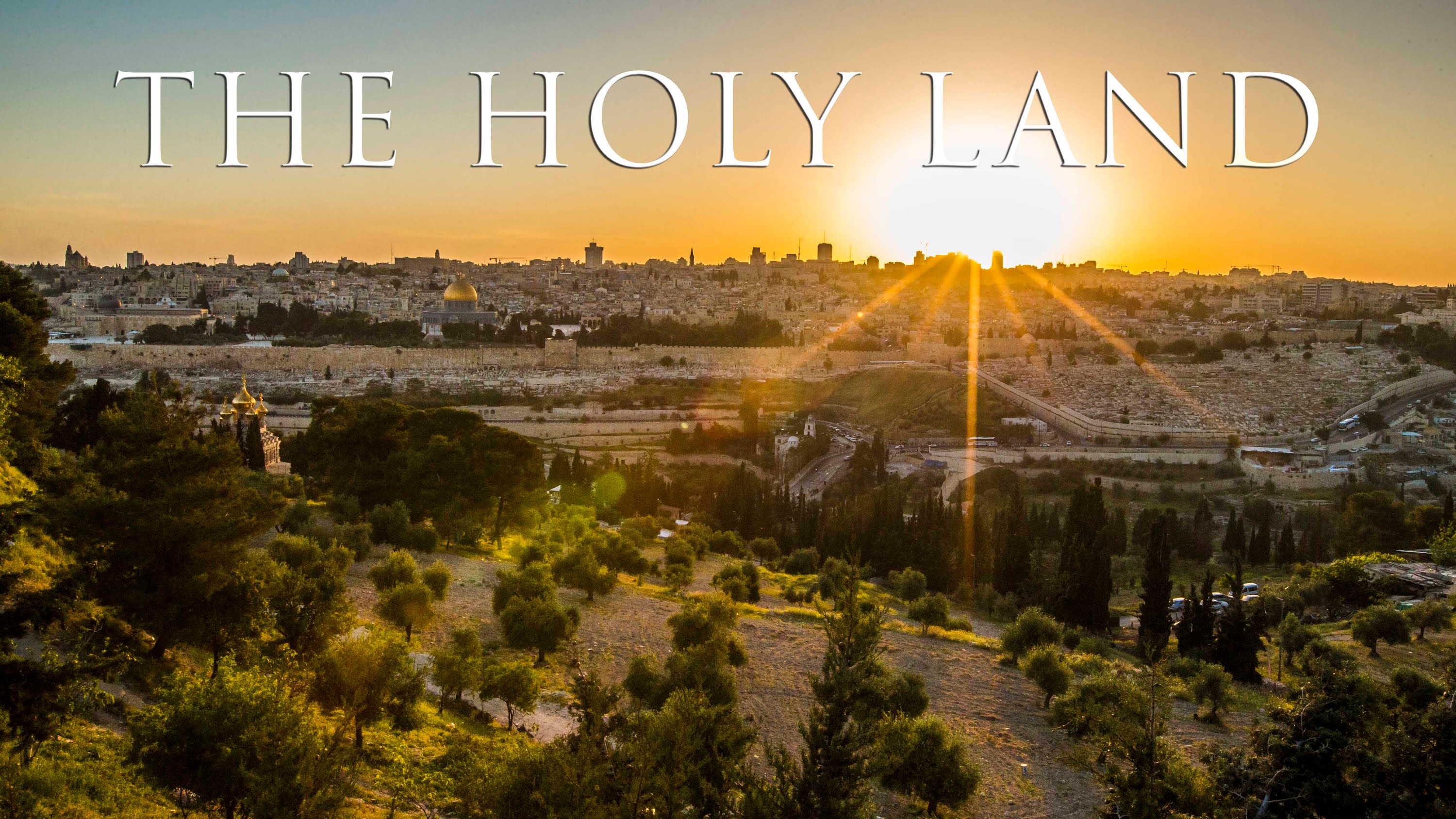
Why does the Qur’an keep returning to one geography as blessed—and what made that land special before Abraham, Moses, or the Temple? What if the answer begins with Noah’s Ark, not with a later sanctuary? And what if the familiar image of the Ark—a gigantic wooden zoo drifting passively on the surface—is not the vessel the Qur’an describes?
The method used throughout is simple: the Qur'an is the controlling witness. Later tradition does not define the vessel, its technology, its cargo, its landing place, or the sign that remained. The Qur'anic text does. External linguistic, historical, geographical, and archaeological evidence is brought in afterward to test the reconstruction against the physical world.
The argument of this paper is cumulative. The Qur'an describes a divinely engineered vessel, a technologically capable setting, a craft made of slabs and mortar in the controlling translation, a vessel that runs and anchors, a blessed landing, a resting place called al-Jūdī, and a sign deliberately left behind. Read together with the Qur'an's repeated description of the Jerusalem/Holy Land geography as blessed, these clues point toward a single question that is rarely asked: is the land holy because of what stands on it—or because of what lies beneath it?
1. Why Is the Holy Land Blessed?
The expression “Holy Land” is usually treated as if its holiness were self-explanatory. The Qur’an does not treat this geography casually. Q 21:71 says that Abraham and Lot were saved “to the land which We had blessed in for the worlds.” Q 7:137 describes the territory inherited by the oppressed Children of Israel as “the land that We had blessed in.” Q 17:1 describes the Farthest Temple as the one “which We had blessed around.” [1]
That repeated language demands an explanation. What exactly made this land blessed? The soil itself cannot explain it, and the later Temple cannot be the beginning of the answer if the blessing is older than Abraham. The Qur’an points further back. Immediately after the Ark narrative, Q 23:29 has Noah ask God to bring him to a “blessed place” of landing or settlement. The sequence is striking: Noah seeks a blessed landing; the Ark comes to rest; and later Abraham, and the Farthest Temple all occupy a geography repeatedly described as blessed. [1]
This paper therefore advances a direct proposition: the sacred status of the Holy Land predates Abraham and the Jerusalem Temple, and its primordial blessing may originate with the landing and preservation of Noah’s Ark. If so, the holiness of Jerusalem is not merely the result of a sanctuary later built there. The sanctuary may have been built there because the place was already holy.
2. The Vessel the Qur’an Actually Describes
A. It is constructed under divine direction
Q 11:37 says: “And construct the ship under Our eyes and Our inspiration, and do not speak to Me regarding those who are wicked. They will be drowned.” Q 23:27 repeats the same construction language: “Construct the ship under Our eyes and Our inspiration.” [1]
The starting point is therefore not an ordinary shipwright copying an existing design. Noah is instructed to build a particular craft under divine oversight and inspiration. Whatever the final engineering model, the Qur’an itself distinguishes this vessel by the source of its design.
B. The construction provokes mockery
Q 11:38 says that while Noah was constructing the ship, groups of his people passed by and mocked him. [1] The verse never says they mocked him because there was no visible flood. What the text places directly before us is an unfamiliar construction being built under divine instruction. The obvious question is therefore what about the craft—its form, scale, material, or purpose—made it an object of ridicule.
The Qur’an gives no basis for portraying Noah’s society as primitive. That image comes from later assumptions, not from the text. The society around Noah must be reconstructed from the capabilities the Qur’an itself describes.
3. The Society Around Noah is Not Primitive
The strongest internal clue is the exchange between Noah and his son while the vessel is already underway. Q 11:42 says: “And while it was running with them in waves like mountains, Noah called to his son, who was in an isolated place: ‘My son, ride with us, and do not be with the rejecters!’” The son answers, Noah replies, and only then does the wave come between them. [1]
The Qur’an does not name the communication device, but the physical scene is clear: Noah and his son conduct a coherent two-way exchange while the vessel is underway, the son is in an isolated place, and waves “like mountains” stand between their environments. Ordinary close-range shouting is difficult to reconcile with that setting. The mechanism is unstated; the capacity for communication across the separation is part of the scene.
This matters because Noah’s world should be approached as technologically capable unless the text shows otherwise. A divinely directed craft built in such a setting need not resemble the traditional open wooden Ark at all.
4. “Slabs and Mortar” or “Wood”: What Was the Ark Made Of?
Q 54:13 is unusually specific in the Monotheist Translation used throughout this study: “We carried him on a craft made of slabs and mortar.” The Arabic is dhāti alwāḥin wa-dusur. Q 54:14 then says: “It ran under Our watchful eyes; a reward for one who was rejected.” [1]
The word alwāḥ can denote boards, tablets, panels, or slabs; the Quranic Arabic Corpus conventionally glosses it here as “planks.” [2] The controlling translation renders it “slabs,” while dusur is rendered “mortar.” Nothing in the Qur’anic wording requires the familiar picture of a timber hull assembled from ordinary wooden planks. The structural vocabulary is fully compatible with a rigid panel or slab-built craft.
The durability question becomes central because Q 54:15 immediately follows the construction description with: “And We have left it as a sign. Are there any who want to learn?” [1] In this paper the sequence is read naturally: the craft just described, or a substantial trace of it, was deliberately left as a sign. A durable slab-built or composite structure fits that preservation requirement far better than the conventional image of exposed untreated timber surviving for millennia.
5. A Craft That Runs, Anchors, and May Not Be an Open Surface Ship
Q 11:41 gives the vessel two operational states: “in the name of God shall be its running and its anchorage.” Q 54:14 likewise says: “It ran under Our watchful eyes.” [1] The Qur’an does not mention sails, oars, wind propulsion, an open deck, a pointed bow, or the familiar visual features supplied by later art.
A closed, sealed, or semi-submersible craft is therefore a serious engineering model for the Qur’anic vessel. A flat or slab-like hull, controlled propulsion, and the ability to operate below the most violent surface action would explain how a craft could remain functional among waves “like mountains.” The Qur’an does not force the vessel into the shape of a conventional surface ship.
The phrase al-fulk al-mashḥūn adds another clue. The controlling translation calls it “the charged ship” in Q 26:119 and Q 36:41, and the same expression appears again in Q 37:140. [3] The conventional lexical rendering “laden” must be noted, but it does not end the inquiry. Read alongside the vessel’s running and anchorage, the repeated designation “the charged ship” deserves to be tested as an operational description rather than dismissed as cargo language alone.
6. What Did Noah Actually Carry?
Q 11:40 and Q 23:27 instruct Noah to take into the vessel “from each a pair of two,” together with his family and the believers except those excluded by the decree. [1] The Qur’an does not describe cages, feeding systems, animal decks, or the loading of mature specimens of every terrestrial species.
The Qur’anic requirement is preservation in paired form. It does not require two mature adult specimens of every terrestrial species to be housed, fed, ventilated, and cleaned aboard the vessel. In a technologically capable society—and in a craft built under divine instruction—a compact biological preservation system using embryos, gametes, seeds, tissue, or equivalent reproductive material is entirely consistent with the functional requirement of preserving each pair.
This reading removes the enormous size and logistics problem created by the later “floating zoo” image without contradicting the Qur’anic instruction. The text requires preservation; it does not prescribe the zoological mechanism imagined by later art and storytelling.
7. al-Jūdī: The Critical Geographical Test
Q 11:44 names the resting place directly: “And it came to rest upon the Judi.” [1] Any theory locating the Ark must therefore account for al-Jūdī.
The Qur’an itself gives the resting place as al-Jūdī. The familiar identification with Cudi Dağı/Qardū in southeastern Turkey comes from late antique and medieval Syriac and Islamic geographical tradition, not from the Qur’anic wording itself. Encyclopaedia Iranica and modern scholarship record that later identification. [4][5] It is therefore external evidence to be weighed, not a location that controls the Qur’anic geography in advance.
The geographical proposal pursued here is that al-Jūdī belongs to the Judean/Jerusalem sacred landscape. The next task is philological: to trace whether al-Jūdī can preserve, reflect, or represent a Judah/Judea toponym through ancient Semitic naming, phonology, inscriptions, or early geographical usage. That question is central because the rest of the Qur’anic sequence already places the blessed landing, the blessed land, and the later sacred center on a single conceptual line.
8. The Ark Was Left as a Sign
Two passages make preservation central. Q 29:15 says: “So We saved him and the people on the ship, and We made it a sign for the worlds.” Q 54:15 is even more pointed: “And We have left it as a sign. Are there any who want to learn?” [1]
Q 29:15 makes the ship/deliverance “a sign for the worlds,” while Q 54:15 says that it was “left” as a sign. [1] A recent Brill study likewise treats Noah’s Ark as one of the Qur’an’s tangible historical signs. [6] The preservation of a physical remnant is therefore not later folklore imported into the narrative; it is rooted in the Qur’an’s own language of a sign deliberately left behind.
9. Jonah and “the Charged Ship”
Q 37:140 says of Jonah: “As he tried to escape to the charged ship.” [1] The Arabic uses movement toward al-fulk al-mashḥūn—the charged/laden ship. The verse does not say that Jonah built the vessel or that it belonged to him.
The wording is significant because Jonah moves toward “the charged ship,” as though toward a known vessel. The same expression identifies Noah’s vessel in Q 26:119 and the ancestral vessel in Q 36:41. [1] Read together, these passages support the possibility that Jonah was attempting to reach the preserved Ark itself rather than an unrelated contemporary ship. Geography and chronology can then be used to test whether that reading fits the wider sacred landscape.
10. The Ark and the Temple: A Preserved Architectural Memory
Modern biblical scholarship has long observed that the Genesis description of Noah’s Ark is unusually architectural. It is given exact dimensions, internal divisions, a side entrance, an opening, and three distinct levels. Cassuto emphasizes the deliberate structural detail of the vessel, while Wenham and other scholars have noted correlations in shape, dimensions, and three-tiered structure between Noah’s Ark, the Tabernacle, and Solomon’s Temple. [9][10]
On this reading, the Ark is not merely a survival craft. It is a divinely ordered sacred structure that preserves life through chaos and re-establishes order after destruction. The Tabernacle and Jerusalem Temple continue the same architectural and theological pattern. This supplies an independent Jewish and biblical bridge between Noah’s vessel and the Jerusalem sanctuary before the geographical identification is introduced. [9][10]
11. Jerusalem, Judea, and the Temple Mount
Jerusalem lies in the Judean hill country and became the political and cultic center of Judah/Judea. Archaeological topography places the city on the watershed of the Judean hills, while the Temple Mount became its sacred center. [7] The Dome of the Rock, completed in 691/692 CE, was built around a prominent natural rock that carries major Jewish, Christian, and Islamic sacred associations. [8]
The geometry of the Temple Mount adds another physical clue. Mount Moriah is a natural ridge, but the sacred precinct above it was deliberately regularized into a vast elongated quadrilateral. Historical measurements of the Haram record a footprint of roughly 700 by 455 cubits, confirming the strongly rectilinear form of the platform. [11] That geometry is striking when set beside the Ark model developed in this paper. A sealed, slab-built, multi-level craft need not have resembled the curved wooden ship of later art; it could have had a broad, box-like or flat-bottomed footprint. The question therefore becomes unavoidable: was the geometry of the sacred enclosure shaped, at least in part, by the form of a structure already lying beneath it?
The Temple Mount hypothesis is therefore precise: the exposed rock need not itself be Ark material. It can function as the visible marker or seal above a preserved structure below. On this model, the Ark came to rest at the primordial blessed landing place; the site became the heart of the land later called blessed; the Ark or a substantial remnant remained beneath the sacred plateau; and the exposed rock became the enduring visible sign associated with that location.
The exposed rock is understood geologically as natural bedrock, which fits this model: the claim is not that the rock is part of the hull, but that it marks or seals what lies beneath. [7][8] The proposition is testable. The decisive evidence would come from the al-Jūdī/Judea philological link, the physical geology of the platform, and non-invasive subsurface investigation beneath the Temple Mount.
Conclusion: A Sign Older Than Abraham?
The conventional picture begins with a wooden Ark, an enormous collection of adult animals, a passive flood journey, and a landing far from Jerusalem. The Qur’an supplies a different picture: a craft built under divine inspiration, constructed from “slabs and mortar” in the controlling translation, capable of running and anchoring, operating in a technologically capable setting, directed toward a blessed destination, resting on al-Jūdī, and deliberately left as a sign for later generations.
Read as one sequence, the pieces form a coherent reconstruction. The Ark was a sophisticated engineered craft rather than an open wooden zoo; the preservation of paired life need not have required mature animals; the blessed landing predates Abraham; and the later holiness of the Jerusalem landscape can be understood as the continuation of a primordial sacred site rather than the beginning of one.
The argument culminates at Jerusalem: al-Jūdī is proposed as belonging to the Judean/Jerusalem landscape, while the sign left behind is proposed to survive beneath the Temple Mount, with the sacred rock marking its location. The Ark–Temple architectural tradition strengthens that continuity rather than standing apart from it, and the elongated rectilinear geometry of the Temple Mount is physically compatible with the footprint of the sealed, slab-built craft reconstructed here. On this reconstruction, the Holy Land is holy not simply because a Temple was eventually built there; the Temple was built at the center of a place already sanctified by the Ark, the survival of humanity, and the sign God chose to leave behind.
Sources
[1] The Qur'an - A Monotheist Translation: Q 7:137; 11:37–44; 17:1, 17:3; 21:71; 23:27–29; 26:119; 29:15; 36:41–42; 37:140; 54:11–15. This translation is the controlling English rendering of Qur’anic passages in this paper.
[2] Quranic Arabic Corpus, Q 54:13 morphology: alwāḥ, root l-w-ḥ, conventionally glossed in this verse as “planks”; parallel translations show variation in how alwāḥ and dusur are rendered.
[3] Quranic Arabic Corpus, root sh-ḥ-n: mashḥūn occurs at Q 26:119, 36:41 and 37:140 and is conventionally glossed “laden.”
[4] Encyclopaedia Iranica, “Gordyene”: late-antique Bēṯ Qardū/Gordyene was widely regarded in Syriac tradition as the landing region of Noah’s Ark on Cudi Dağı.
[5] Bulletin of the School of Oriental and African Studies, “Farewell to the bishop of Hami” (2025), discussing Syriac/Islamic identification of Mount Judi near modern Cizre and the Qardu mountain tradition.
[6] Behind the Story: Ethical Readings of Qurʾānic Narratives (Brill, 2025), discussion of Noah’s Ark as a Qur’anic historical sign, including Q 11:44 and Q 54:13–15.
[7] Jodi Magness, The Archaeology of the Holy Land, chapter “The Topography and Early History of Jerusalem (to 586 B.C.E.)”: Jerusalem’s setting in the Judean hills and its physical topography.
[8] The Metropolitan Museum of Art, “The Dome of the Rock”: the shrine stands on the Temple Mount and encloses a prominent rock with long-standing sacred significance.
[9] Scriptura 122 (2023), “Noah’s Ark and the Flood in Judaism and Islam: A Bi-optic Perspective of Salvation and Sacred Space”: discusses the Ark’s three levels and summarizes scholarly comparisons between Noah’s Ark and the Jerusalem Temple, including shared three-storey form, window/door features, and proportional similarities; cites Cassuto and Blenkinsopp.
[10] Zara Zhang, “Sintflut and Sinai: Genesis 6–8’s allusion to Exodus 24–40,” Journal for the Study of the Old Testament (2026): notes that many scholars have identified correlations in shape, dimensions, and three-tier structure between Noah’s Ark, the Tabernacle, and Solomon’s Temple, citing Gordon Wenham among them.
[11] Journal of the Royal Asiatic Society, discussion of medieval descriptions of the Temple Mount/Haram dimensions: Nāṣir-i-Khusraw records an inscription giving approximately 704 × 455 cubits, while al-Harawī reports approximately 700 × 455 cubits; the measurements confirm the elongated rectilinear form of the sacred platform.